четвртак, 15. децембар 2011.

Around the camp


A backyard of Filipino houses (they keep hens and fighting roosters here-yes, they organize rooster fights)

Lizards are everywhere, but I mean everywhere - they constantly keep running away from under your feet

A pet (prisoner)


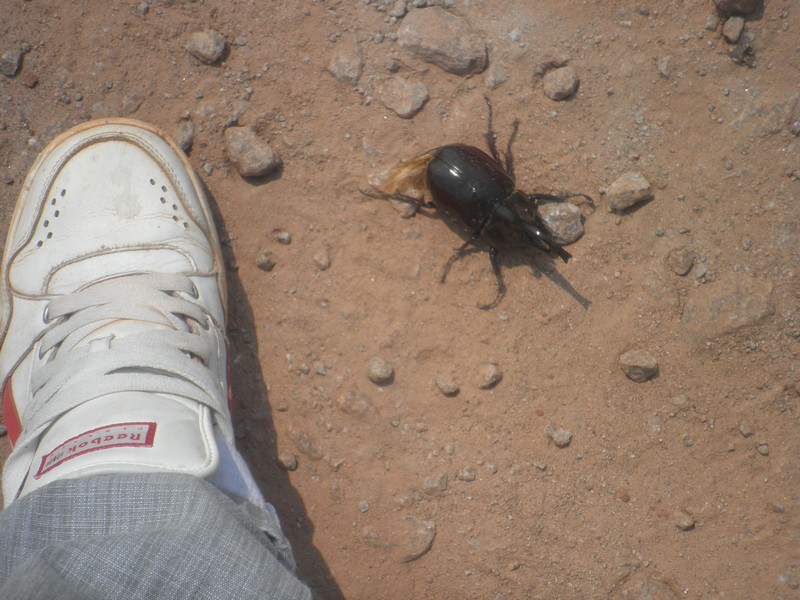
These bugs are huge and they fly (I freak out when they fly close to me) and like to attach to your clothes

Banana tree

Little owl was found in the forest. One guy took her, feed her and when it was strong enough to eat by herself - it was released

Papaya tree

понедељак, 12. децембар 2011.

Observations, facts, etc...


  • Most houses don't have electricity and running water. For that reason people bathe, wash clothes, dishes and cars in the same pond or river. It's nothing unusual to see a grown man, with or without clothes on, washing his car along the road in the middle of the day.
  • Mortality rate is fairly big. On average, once a week a worker comes to our office saying someone in his family died. The company gives them money if a member of the closest family dies. Young children are most often the victims of various diseases, caused by a lack of hygiene. They also receive a bag or two of cement, for the funeral. There are two stories why they are making concrete graves: the first one is so they can stop the spread of the plague; the second is connected to the belief that if you injured certain part of your body, or you have a constant pain in it, you will get well if you eat the healthy part of another human being. Thus, many graves have been desecrated before, so now they decided to protect their deceased.  
  • Equatorial Guinea is polygamist county. It is customary for a man to have more than one woman. For that reason, the power of matriarchy prevails.
  • One of the ways to show that you are a good men-friends (no matter how old are you) is to hold hands.
     

  • The majority of people outside few "urban" areas are hunter/gatherers. Older people are sent into the forest (it's less unfortunate if they don't come back). Due to the lack of electricity, they eat almost everything raw.
  • People do not believe in HIV, AIDS, hepatitis and etc. If they are ill, they ask advice from the local "curandero or curandilo"(im not sure about the spelling) - a witchdoctor or a sorcerer, who is the most respected member of the tribe.
  • They believe that an albino kid is a "godsend". They are very rare (I've seen a couple). They have all the facial characteristics of an Africans, but, in my opinion, look like someone peel of their skin - they are reddish-white. I've been told that they, unfortunately, don't live long.   

субота, 10. децембар 2011.

Days go by...

...and I still can't figure out if they are passing fast or slow. On Monday, it's gonna be two months since I came here. A lot has happened, but nothing crucial...

After a trip to Bata, days were according to the routine - work, reading, football, rest... The next interesting day was a "short" Saturday when we went to play the tournament at camp 4. Before that, one guy took me to see the Cathedral, then it was still in the process of final preparations. It is magnificent. It's huge. It's so white on the hill. The plateau in front of the Cathedral is the size of two football fields, at least. Along the sides of the plateau, 100 big lamp are hanging from the ceiling. They told me that the icons inside are also breathtaking. I can't wait to go there again after the grand opening.


 One guy told me that the life here is all in fazes and I think he had a point. The fazes applies to you free time. First I had a faze of watching Los Serranos, that lasted the first month. I watched them every day, one ore two episodes. Than it was the faze with video game "Football Manager", which I played 2-3h a day. Now I entered in the reading faze, and all the time I'm at home I spend reading. Wonder what's the next one...

Due to the heavy rain and some referendum, we had three "short" Saturdays in a row. Don't know if I wrote about the rain here, but it's something, so okay if I write it again. It rains every day, that is certain. Most of the days you don't know when it's gonna rain - the day is sunny, very hot than all of a sudden - clouds, and in 10 minutes it's flood. It rains hard for half an hour - hour, rarely longer and when it stops within 15-20 minutes everything is dry. Amazing. All the people told me that it's not healthy to be in the rain here, you must change to dry clothes immediately or you could catch a cold, then you immune system is weak and the next thing you know - here comes malaria and you're stuck in bed for three days with high temperature, fever and body pain, can't sleep or eat. And there are no universal method of how to prevent it. Some guys had 2 others 12 malaria in three years. But they all say that it's important to eat well, have plenty of rest and avoid stress as much as you can. Oh, I wandered off from "short" Saturdays to rain to malaria...

The thing I wanted to say is that drinking is bad, and drinking 'n' driving is even worse. And here is the example why. We were supposed to go to the tournament on camp 1 but couldn't cos the local government imposed restriction of movement outside the camps for all vehicles. People stayed in and a lot of them decided to drink the day away - OK, their choice. One smart guy thought it would be wise to go to Mongomo on a dirt, service road alongside the highway we're building, to pick up some chicks. He was wasted. At 9pm my phone's ringing and they told me he had an accident and was taken to the hospital. He slammed in a pile of rocks, dirt, flipped on the roof hit other car and landed on the wheels again. The van looked as if the press went over it - everything was smashed but the doors that were standing there like nothing happened. Fortunately, he didn't fasten his seat belt and is skinny, so he fell out of the van - otherwise he'd die for sure. He didn't have any serious injuries, one wound on his thigh and a couple of bruises and scars. He was incredibly lucky. The outcome of the story is: he was fired, returned home and have to pay 5000 euros of damage. And all for a few beers and a whiskey...

I said it before, people here drink a lot. Not just Serbians - everybody. The beer is the most popular, cos it's the cheapest. The most favorite ones are Cody's and San Miguel. You can also find Heineken, Carlsberg, Mahou and Guinness. There is no Guinean beer or any other African. Whiskey is also popular, if you like something stronger. And alcohol is cheap; beer is from 350 CFC a can, which is around 60 euro-cents, so 24-pack is from 11 euros; a bottle of whiskey, for example Four Roses, is 12 euros and Jack Daniels is less than 20e. 

Payday for Africans is every other Saturday and you can expect that 20% of workers are not gonna show up on Monday, maybe even Tuesday. Locals start drinking in the morning, they drink during a break, often I see some of them with bloody-red eyes from booze during the work hours. As this is company owned by the state, you can't fire a worker so easy. First you give them two warnings and then you let them go - that is if the administration didn't "lose" their warnings. You have to protect yourself all the time, save the copy of every document, make the people sign whatever you give them. People here are very awkward. You can't trust anyone. And I've been said that the Serbians are the worst - you know what you can expect from the locals (they are going to try to scam you for money, but in such an obvious way that it makes you laugh - example, adding a 1 in front of an existing 8h of work) but from most of the Serbians you don't know what to expect. They gonna talk behind your back, make up stories, kiss your ass and than stab you in the back, exploit you as much as they can and blame every mistake on you. That is especially the case if someone new arrives, one who is generally good, somewhat trust people and think that if you mean and do good - people will do the same to you as well. O, how I was wrong...

Trust no one - that's the new motto. 

четвртак, 8. децембар 2011.

Something's happening

Every day's pretty much the same except Sundays. Now, this means I'm resting the whole day, but once I receive Guinean ID (Permiso de residencia) I'll be able to go out of the camp and see other parts of the country. So, for the time being, I'm sentenced to stay behind the fence ;)  I mean, I can go anywhere I want, but if the police ask for my documents - I'm screwed. And there are road barriers with police and/or military approximately every 30-40km.


First time I left my camp, we went to camp 4 so I can be vaccinated. The camps are about 40km apart, so 30 minutes drive. Between are about dozen villages, each one having up to 30 houses. There's one bigger, close to our camp, called Mongomeyen - about 500 people live there. Guys form the camp go out there on Saturday nights, to the pubs. There's a lot of pubs, but in fact it's just a house that sells alcohol and maybe have some music. Nevertheless, I can't wait to see what is like to go out here. Heard the stories that it's boring and all the same, but still it's new for me and I'd like to see it with my own eyes.


                                                                                             Typical African houses


The second weekend after my arrival was a "short Saturday", meaning we work till noon and the Africans collect their money afterwards. It's like that every second Saturday. The economist's got to wait for the people from Bata, from the central, to come to the camp at around 1pm, collect the money for the administration and then wait till 5-6pm till they finish, count what is left, get the lists and then it's over. So "short Saturday" isn't short for everyone...

Another thing about that day is there's a football tournament between camps, held on different camp in rotation. I was particularly looking forward to that, as it is the chance to see some other faces apart from the ones on your camp. That weeks' it was our turn to host the tournament. We've bought a lot of beer, the cook prepared a feast, we made the trophies...All five teams showed up. In the end, we won :D It was close, everybody was tired, we drank a few beer in the mess and rested the whole day tomorrow.


The second time I left the camp was some two week after arrival. We went to the hospital - as this was a part of my job, taking care of the sick ones. The hospital is in the city of Mongomo, 50 km away from camp. It's located on the border with Gabon. Some 3000 people's living there. I had the chance to buy some cereals for breakfast and other stuff, as that's the closest store. It's crowded on the streets around the market, but they start working quite late, around 10am. It was an interesting experience.


                           Border with Gabon (the dirt road is another country)

Street in Malabo


The next week I went to Bata, didn't have time to go around the city - it was strictly business, but have seen my friend who told me about this and had time to shat with him for a while. On the way from and to the camp, once again I've seen colorful houses, beautiful landscapes and people selling bananas and monkeys along the road. When you go to Bata, the whole day pass so fast as you drive 2h in one direction, finish what you came for and head back and you return to the camp around 5-6pm, just in time for dinner. It's a bit tiring, but I'm looking forward of doing that at least once a week once I receive my ID and a car. Until then, I'm gonna enjoy occasional trips... 

уторак, 6. децембар 2011.

The routine has begun

I've finally moved into my house. Keeping in mind that it's only a container, it's pretty nice. There's one big L-shaped living room, a bedroom and a bathroom. I live alone. I could share a house with one guy, but didn't want as I wanted my peace after work.


First few weeks of work were getting to know my duties and responsibilities, there are many of them but still you have some time during work to surf the net :). Nothing here is so urgent and you can't make any huge error if you work in this position. Mainly, I'm collecting documents for renewal, handling housing arrangements, holidays, giving pills for flue and headache, doing quick test for malaria, keeping an eye that the locals do not steal too much food from the kitchen and that the laundry staff are doing their job. Last two are the hardest and demand the biggest effort. Especially if you've learn to use common sense, always try to explain things in calm tone and are not typical "balkan" boss who shout, yell and intimidate his/hers employee. My co-worker told me several times: "You're too nice for this job". I took it as a compliment. He meant to say that here you need to shout and yell so workers are afraid of you and that's how you earn their respect. I chose not to be like that, as it's against my beliefs, even if it means it's going to harder for me and it's gonna take a time for them to start respecting me. I hope they will eventually do that and realize it's easier for all of us doing business in that way. We'll see...

My day looks like this:
6:20 alarm yells
6:35 breakfast
6:50-12 work
12-12:45 lunch and some reading (if I have time)
12:45-17 work
17-18 lower-back work out
18-18:20 dinner
18:20-19 learning spanish
19  football (or if there is not enough of us, jogging or taichi @ 20)
20:15 watching Los Serranos, some football on TV or chating
22:15 bedtime 

And it's almost the same every day except Sunday, when there is no work so I sleep till 8 and hang out the whole day. When I'm in the mood, I go around camp and see if anyone is outside and hang out with them for a while. Actually, there's quite a few people I can speak easily and on the same level (I sound like a freaking snob). I also don't like to impose myself, but when someone invite me to his house, for a game of cards for example, I go. 

I decided I'm gonna do a lot of sport here. As my work is mainly connected with the chair, I don't move a lot. In addition, the food is strong, greasy, typical serbian cousin (sve sa zapržkom) and I was warned that I might gain a lot of weight, and most people do that. I don't want that happening to me for two obvious reasons: the first one is the health (blood pressure and cholesterol) and the second is my figure, the way I look (I don't like when I gain weight). That's why I wanna work out as often as I can (it's not like I don't have time for that or have something better to do in the jungle). I also wanted to eat as healthier as I can, a lot of vegetables and fruits and avoid deep fried food. The best thing about food here is that there is a lot of fruits: bananas, pineapples, mangoes, watermelons, sometimes even avocados. I love eating pineapples the most.

       
Now I realized that I'm not in the mood for writing today, so will continue some other time with something more interesting (just remembered few good stories, but am too bored to write them down). Till the next time...

петак, 2. децембар 2011.

Campo tres


The camp is surrounded by wire. There's a gate at the entrance. It's like a military base. Those were my first thoughts. 


Everything is made of PVC panels. So sterile...I didn't think about this much prior coming, maybe that's why it surprised me. All houses are the same. How will I found mine...I was confused, had so many information in my head. All the people bombarded me with advices, stories, their impressions, etc. I just wanted to go to sleep and get a fresh start tomorrow. I couldn't move in my new house as the guy I was substituting had still been on the camp, so I crushed in a house next door. I wanted to unpack...


New day, new beginning - first actual day on the job. My position should have been "Head of general businesses" - meaning I was in charge of the salaries, all payments, making sure that the working hours are correct and in accordance with company's guidelines. But the directors changed that, so I was to be "Head of social standards" - I had no clue what that means, not even when they explained it to me. In fact, there is no simple explanation - you have to try to fulfill almost every need someone in the camp has and it varies from "I'm missing my undies"(in those words) to "The dinner is the same as the lunch was" and a lot more.So, I didn't have a clue what my job is going to be, but was happy in a way that I wouldn't have to have a lot of contact with the local workers, so I can easily learn Spanish on my own pace and not to be overwhelmed all at once without knowing how to respond. 

That first day the guy I was replacing (he looks a lot like Raymond form "Everybody loves Raymond" - the face and the voice and even the way he speaks) drove me around the whole camp and the part of the highway our camp is building. It' s literally going through the heart of the jungle. Bulldozers, excavators, dumpers and all the big construction machines everywhere. The nature, the part you can see through thick and dark rainforest is so different from what I've seen before. I couldn't recognize any of those trees, except banana tree. And the sound of the jungle is awesome, who knows what kind of animals live there - I surely won't check. 


That night "Raymond" was having a farewell party. There I met more people. It was a bit awkward as it always is in a situation where you don't know anyone. I was scanning, looking at the people, trying to figure out the general mentality. There's a lot of drinking, but really a lot. Beer and whiskey. People drink the minute they finish their job and it's like that every day - job, drinking, sleeping - routine. I didn't wanna fall under that circle, it would've killed me. But I have to say something, despite the heavy drinking everybody's responsible, they go to bed around 10pm, so they'd have enough sleep. Sleeping well is the most important thing  here, they were all united in that. It keeps your organism stronger and more capable of fighting the diseases like malaria, tifoidea and the rest - and you don't wanna "catch" any of them, having to lay in your bed for three days, shaking with fever...People were unanimous in one more thing - what is normal back home, here is not and vice versa... I thought - OK, I'll try not to stand out too much, meaning I'll try not to wear my pajama trousers and colorful CinemaCity and Exit T-shirts ;) One guy told me later: "How many of those T-shirts do you have?", don't know was it a compliment or what... Some people have only a few T-shirts to wear - for these almost two month, I've seen one guy changing only 3.  It's not they don't have the money (they have more than needed), they are just like that - it's normal for them to work and spend afternoons in the same outfit, for several days in a row.

I forgot to say that I'm the youngest at the camp by far, even think the youngest of all Serbians working for the company. Still don't know is it good or bad... One more thing that most of you couldn't understand about people here (this may sound degrading, arrogant or something in that manner, but I don't have an intention of offending anyone, it's just a fact) - 80% of people here are "bluecollars", manual workers, "hillbillies", or in a lack of good English words, šljakeri and sirovine. I've never considered myself as some super smart, educated guy, but ask yourself: How many people do I know, hang out with and work on a daily basis, that only finished primary school (if that)? See my point here? It was a completely different surrounding that what I used to, what was normal to me. Had to change the approach. A lot of adaptation was ahead of me. I'm just hoping I won't lose myself...


четвртак, 1. децембар 2011.

So I was there...

We arrived in Malabo, the capital of Guinea Ecuatorial, the city located on an island in the gulf of Guinea some 40km of the coast of Cameroon - so it's far from mainland EG, around 7pm local time. Slept, woke up at 6am and took a plane to Bata, where the company I started working for has its headquarters. There I saw my friend from Novi Sad, catch up and he showed me the company, introduced me to the people, had a sandwich and I was set to go. 

  
My place of work was, and still is, a camp alongside the highway that the company is building. The camp is in very heart of the rainforest, in the middle of the country, about 180km from Bata, the ocean and the civilization ;). The road is good and you can see a lot of interesting things along the way. That was actually the first time I realized I'm in Africa. This county, as I read, is second most safest in the continent and has a very high GDP per capita. They discovered oil in the gulf so they have a lot of money. Everything is still some way from the European standards but they are developing pretty fast. It's like that in the city but different situation is when you go inland. Houses are small, one story shacks without electricity and running water. And they don't have glass on windows (maybe cos of the heat), only wooden louvers. People are hunters/gatherers - one that don't work. Along the road, one can buy bananas, mangoes, wild hogs, monkeys, crocodiles, etc and it's all food. The soil is red, laterite. I came in the rainy season so in those 2h drive to my camp we had 3-4 showers, a really big ones. And it's like that every day - you know it's gonna rain, the only question is - when?. Good thing about the camp is that is on a higher altitude than Bata, so it's not humid as much. You can feel the air is different than what you used to, but it's very clean as you are in the middle of the jungle. 

Of course it rained when we arrived at the camp...